Remote deposit without account access. No balances, no transfers, no bill pay — just the one screen that takes a check.
The check your tech collected on Tuesday sits in a truck until Friday — if it gets there at all. Checks get lost, damaged, and pocketed, and you find out weeks later when the customer says they already paid.
With Checkdepo it's recorded the moment it's taken. Image, amount, time, and who took it. The paper stops being the record.
To let a field rep deposit a check through your bank's app, you have to give them your bank login. Nobody does that. So companies do what they've always done:
None of that is a technology problem. It's an access problem. The deposit feature can't be separated from the account it lives in.
Checkdepo isn't a better deposit app. It's a capture tool that was never attached to your bank account in the first place.
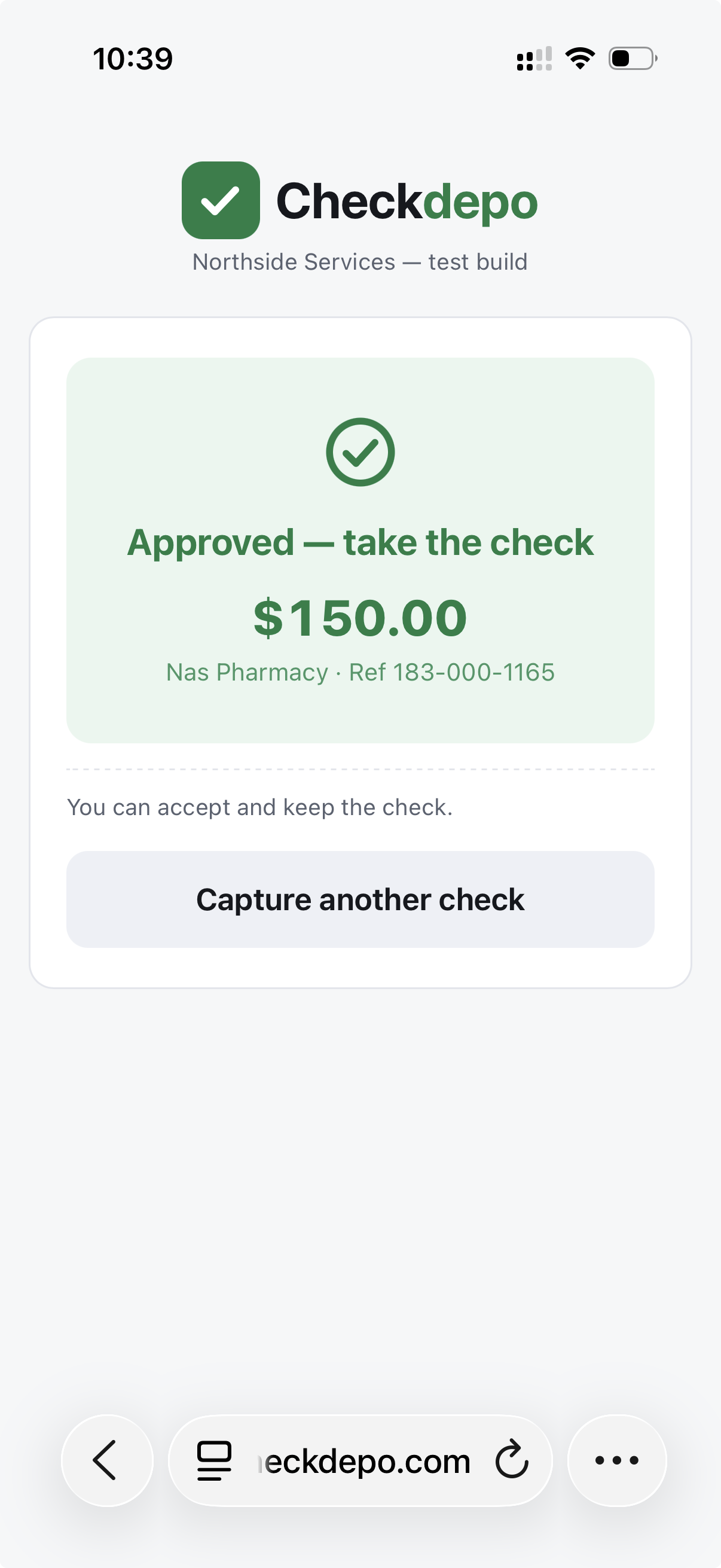
Your rep opens Checkdepo, takes a picture of the check, and gets an answer. The money deposits electronically into your account. What the rep can do is take a check — that's the whole surface. No balances, no transfers, no account, no way to move a dollar anywhere except to you.
One picture. Checkdepo reads the whole check, including the machine-printed line at the bottom that identifies the account.
They type the amount from the check. We cross-check it against our own read and catch the mismatches before anything is authorized.
Take it, or don't — decided in seconds and texted so there's a record. It's waiting in your portal while your rep is still three stops away.
An authorization tells your rep whether to take the check. If you'd rather not carry the risk at all, approved checks can be covered outright — if one comes back, you're made whole.
Plumbing, HVAC, electrical, repair. The check gets written at the kitchen table, not at a register.
Dozens of stops, dozens of checks, and one trip to the bank that no longer has to happen.
Rent, dues, and past-due balances collected in person.
If your revenue arrives in someone else's hands before it arrives in your account, this is the gap.
What you see. Every capture lands in one place: what was taken, when, where, and whether it cleared. If a customer disputes a payment two weeks later, the check image, the amount, the time, and the name of the person who took it are all still sitting there.